Hunger As a Weapon Of War: Reflections on Siege, Power, and the Politics of Starvation
- Shaimaa Asami
- Jan 13
- 5 min read

Written by Shaimaa Asami
Hunger has long been imagined as a distant fear — a crisis belonging to history books, dystopian novels, or faraway conflicts. Yet for millions, hunger is not a metaphor. It is engineered, deliberate, and deeply political. Throughout my studies in development and humanitarian crises, I have returned repeatedly to one unsettling truth: starvation is not only a consequence of war, but one of its most calculated tools. In Syria, where I first began researching this topic years ago, hunger became a method of control so systematic that entire neighborhoods were reshaped not by bombs but by the slow collapse of life under siege.

The Logic of Starvation in War
The Syrian conflict offered one of the clearest contemporary examples of what Alex de Waal calls a counter-humanitarian ideology — a deliberate rejection of humanitarian norms in pursuit of military and political priorities. Communities such as Eastern Ghouta, Madaya, Homs, and parts of Aleppo lived for years under siege, caught between encirclement, targeted attacks on infrastructure, and the complete obstruction of food, medicine, and relief.
The strategy was brutally simple: “kneel or starve.”
It was not only the Syrian regime that used starvation as a tactic, but also armed non-state groups and other actors who recognized the power of controlling bread, water, and access to survival itself. In Madaya in 2016, an estimated 40,000 civilians were trapped, many reduced to eating leaves, salt water, and animal feed. International outrage surged, yet little changed. The Syrian case was not isolated. As a British representative to the UN once remarked, millions of civilians around the world continue to suffer from starvation used against them as a weapon of war. From Yemen to South Sudan, from Ethiopia to Gaza, hunger remains a political instrument — effective, quiet, and devastating.

Why International Law Is Not Enough
The international system recognizes the right to food as a fundamental human right. The Geneva Conventions prohibit starvation of civilians as a method of warfare, and the 1977 Additional Protocol I explicitly forbids attacks on objects indispensable for civilian survival. More recently, UN Security Council resolutions have condemned the use of hunger as a weapon.
But these frameworks share one weakness: condemnation without enforcement.
Humanitarian law depends on political will — a resource often in shorter supply than food itself. Throughout the Syrian conflict, legal norms neither stopped sieges nor ensured humanitarian corridors. Relief convoys were blocked or attacked. Bakeries and agricultural fields were targeted. Civilians were punished collectively while the world watched.
Even now, after the fall of the Syrian regime on 8 December 2024 and the emergence of a new government, the legacy of siege warfare continues to shape communities. Reconstruction is slow, trauma is deep, and political uncertainty remains. Changing the leadership does not erase the structural and regional dynamics that enabled starvation as a weapon in the first place. The conflict may have shifted, but the patterns of deprivation and vulnerability have not yet fully ended. This is why, even looking ahead to 2050, legal norms alone will not stop starvation tactics. Laws without accountability remain symbolic.

Starvation by Commission: How Infrastructure Becomes Targeted
In modern conflicts, hunger is rarely caused by natural scarcity. It is manufactured through deliberate choices — destroying bakeries, burning fields, blocking markets, cutting electricity, restricting cash flow, and attacking humanitarian workers. These actions, known as “using food as a weapon by commission,” accelerate the collapse of livelihoods. When agricultural areas are bombed and relief convoys are obstructed, communities are pushed rapidly beyond the threshold of survival. Malnutrition becomes widespread long before the world reacts. Looking at photographs from Ethiopia’s 1984 famine alongside images from Syria or Yemen decades later is almost unbearable. The similarities reveal a grim continuity: despite legal progress, global institutions still struggle to prevent hunger-driven warfare.
Is There Room for Hope?
UN debates continue to reaffirm the same principles: protect civilians, allow humanitarian access, end the use of starvation as a weapon. Yet even when the Security Council reaches consensus, implementation remains weak. As one representative noted, the solution is “ultimately political,” even when the crisis is profoundly humanitarian.
Political solutions, however, are slow. Wars shift, alliances change, and civilians remain trapped in the middle.
So what would actually make a difference?
Enforcement mechanisms — real consequences for states and armed groups that weaponize hunger.
Independent humanitarian access guarantees, protected by international actors with both political will and leverage.
Early-warning systems paired with pre-authorized intervention protocols, so that aid does not depend on political negotiation at the height of crisis.
Strengthened international courts capable of prosecuting starvation crimes without relying on Security Council approval.
These are difficult solutions — and some may remain aspirational. But without them, hunger will continue to serve as a weapon in the chaotic and lawless spaces of war.
The Tragedy that Repeats Itself
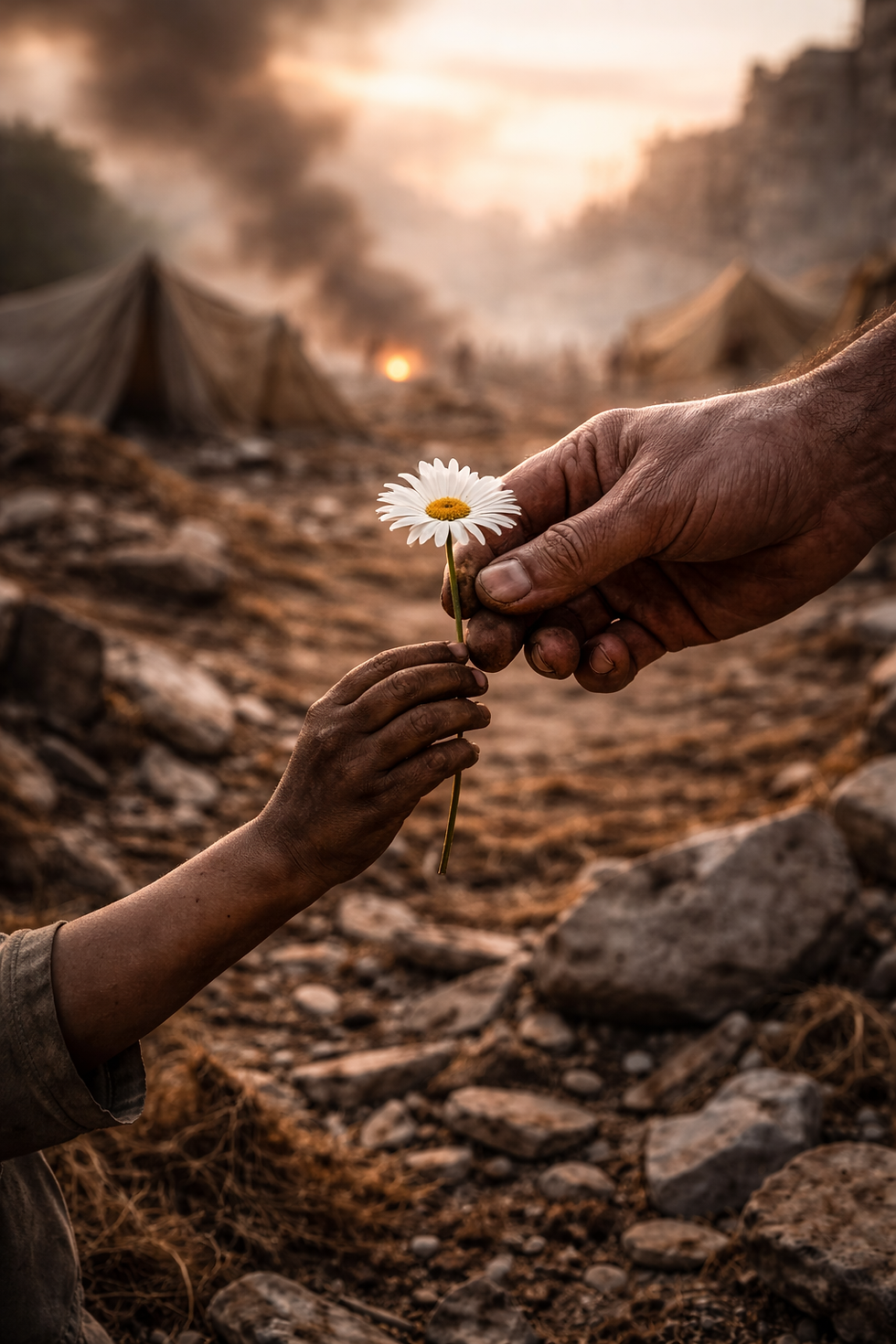
The real tragedy is not only that siege-induced hunger happens. It is that it happens again and again, across decades and continents, despite laws, norms, resolutions, and moral outrage. If images from 1984 Ethiopia, 2016 Madaya, 2018 Hodeidah, and 2025 Gaza look painfully similar, it is because the international system continues to protect political sovereignty more than human survival. More recently, the widespread deprivation and restrictions on food, water, and humanitarian access in Gaza have once again brought starvation to the center of contemporary conflict. As with Syria and Yemen, hunger is not an unintended byproduct of war, but a foreseeable and structural outcome of siege, blockade, and the deliberate obstruction of civilian life. Until accountability becomes non-negotiable, starvation will remain one of the most effective — and least punished — weapons of modern conflict.
References:
De Waal, A. (2018). Mass Starvation: The History and Future of Famine. Cambridge: Polity Press. Chapter 10: “The New Atrocity Famines”.
Macrae, J., & Zwi, A. (1992). Food as an instrument of war in contemporary African famines: A review of the evidence. Disasters, 16(4), 299–321.
ReliefWeb. Hunger as a Weapon of War: How Food Insecurity Has Been Exacerbated in Syria.(ReliefWeb analytical report)
United Nations. (2016). Starvation as a Weapon of War Is a War Crime, UN Chief Warns Parties to Conflict in Syria.
United Nations. Universal Declaration of Human Rights.
International Committee of the Red Cross (ICRC). The Geneva Conventions of 1949 and their Additional Protocols.
Middle East Eye. Syrian army accused of burning crops in rebel-held Damascus suburbs.
BBC News. Yemen conflict and starvation.
